
Please Look Up
The people building the future would like someone to supervise it

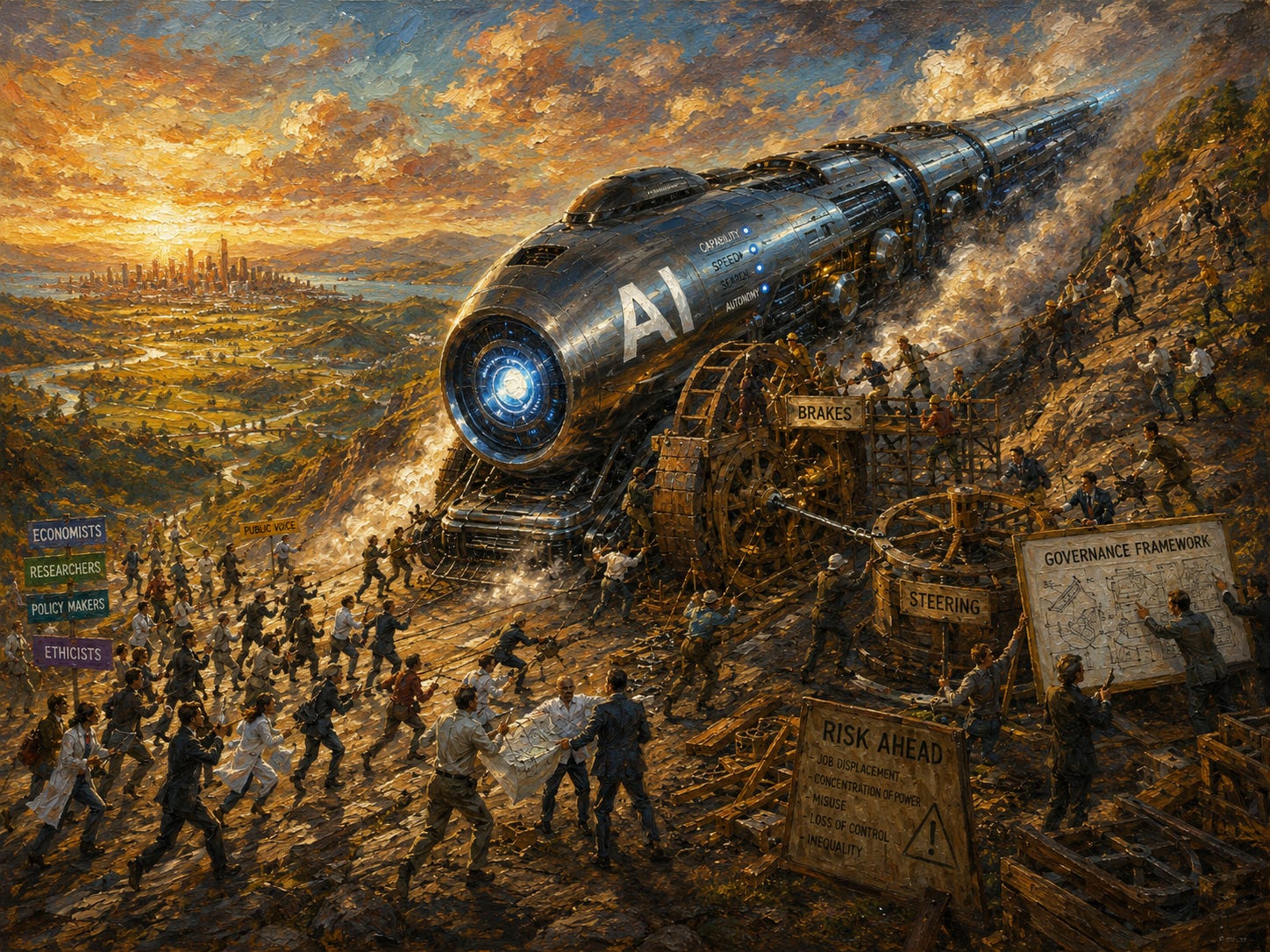
This week, the warnings about speed and oversight grew louder - not from AI’s critics, but from the people closest to the frontier.
These are not Luddites chaining themselves to a data center. They are economists, researchers and CEOs whose careers depend on AI succeeding.
Their message is simple: the technology is moving faster than the institutions meant to manage its consequences.
Economists Enter the Fog
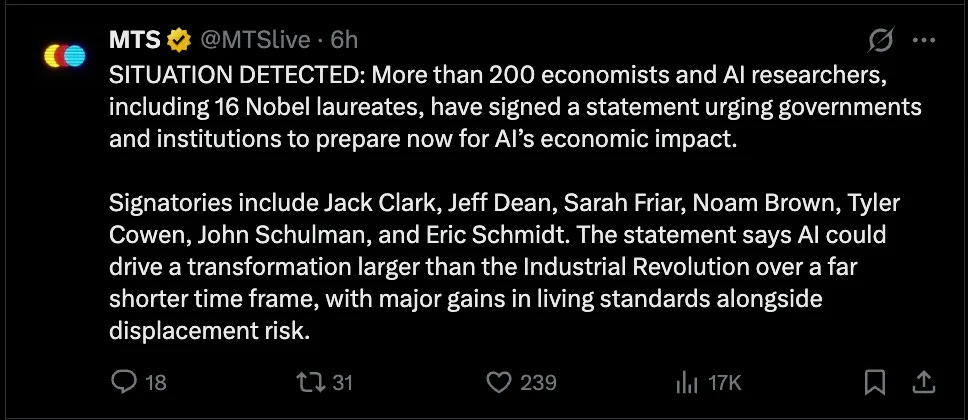
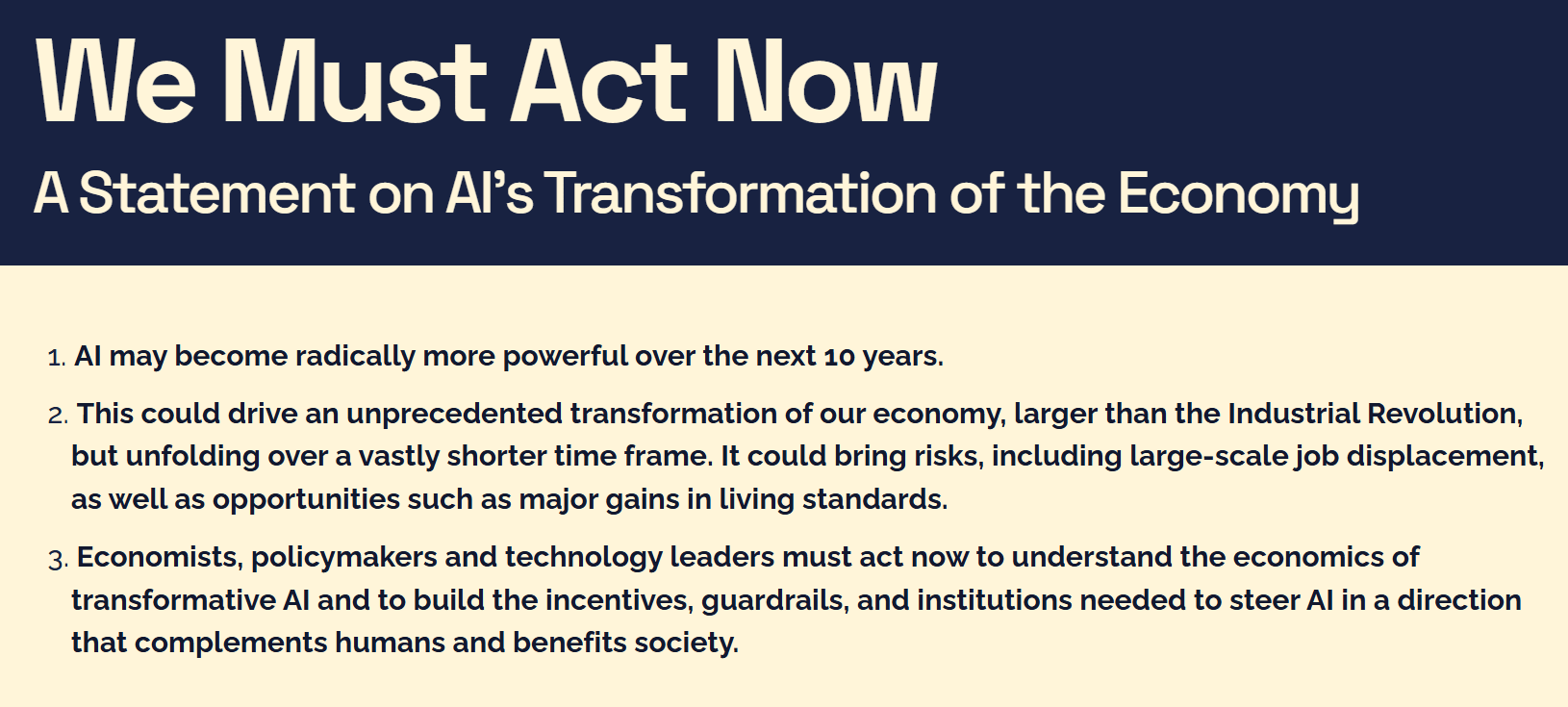
This week, more than 200 economists and AI researchers - including 16 Nobel laureates - signed an unusually concise statement titled We Must Act Now. The title is strikingly direct for a profession that can spend 40 pages deciding whether a variable is statistically significant.
The statement warns that AI may produce an economic transformation larger than the Industrial Revolution, compressed into a fraction of the time. The signatories call for policies that encourage AI to complement workers, distribute prosperity broadly and avoid concentrating the gains among a small number of companies and capital owners.
The coalition includes people with sharply different views on AI’s ultimate economic effects, but they agree that governments are underprepared for the speed and scale of the transition.
The economic case for intervention does not require believing that AI will cause permanent mass unemployment. It requires noticing that markets optimize for profits, not social adjustment.
A company deciding whether to use AI does not ask, “Will this preserve the dignity, bargaining power and long-term employability of the affected workers?” It asks whether software costing $20 per seat can replace people costing $120,000 per year. This is not because the company is evil. It is because the spreadsheet has no column for civilizational stability. So the economists would like policy to influence the outcome.
Economists and researchers are rarely rewarded for collective displays of uncertainty. Their profession is built around models, forecasts and mechanisms. When more than 200 of them publicly concede that the road ahead is obscured, the correct response is to take them seriously.
Anthropic Asks the Hard Questions, Awkwardly
Anthropic has long positioned itself as the conscience of the frontier AI industry. This week, it turned that posture into an advertising campaign.
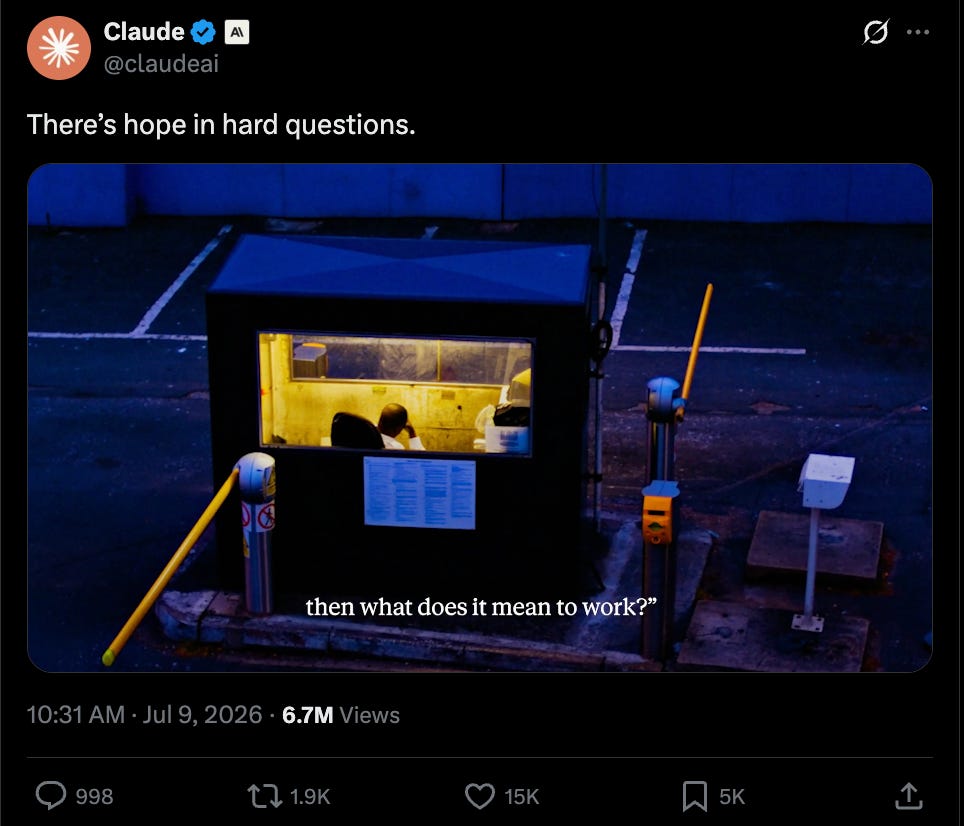
The company’s new film, There’s Hope in Hard Questions, asks whether AI can be trusted, whether it will make the world more dangerous and who will “hit the brakes” if necessary. It opens with a burning house and cycles through images of facial recognition, homelessness, industrial labor and rows of tombstones.
Anthropic says the broader initiative is intended to solicit the public’s hardest questions about jobs, creativity, agency, science, family and safety - and to publicly track how the company responds.
The intent was clear enough: Anthropic wanted to acknowledge that the technology carries real trade-offs.
The execution was less successful. The ad landed somewhere between an Apple brand film, a political warning spot and the opening sequence of a dystopian thriller. The graveyard imagery was particularly jarring. Most companies prefer not to associate their product with mortality at scale. Anthropic saw the norm and chose creative differentiation.
People mocked its earnestness, its corporate solemnity and the peculiar spectacle of an AI company dramatizing the dangers of an industry it is helping accelerate.
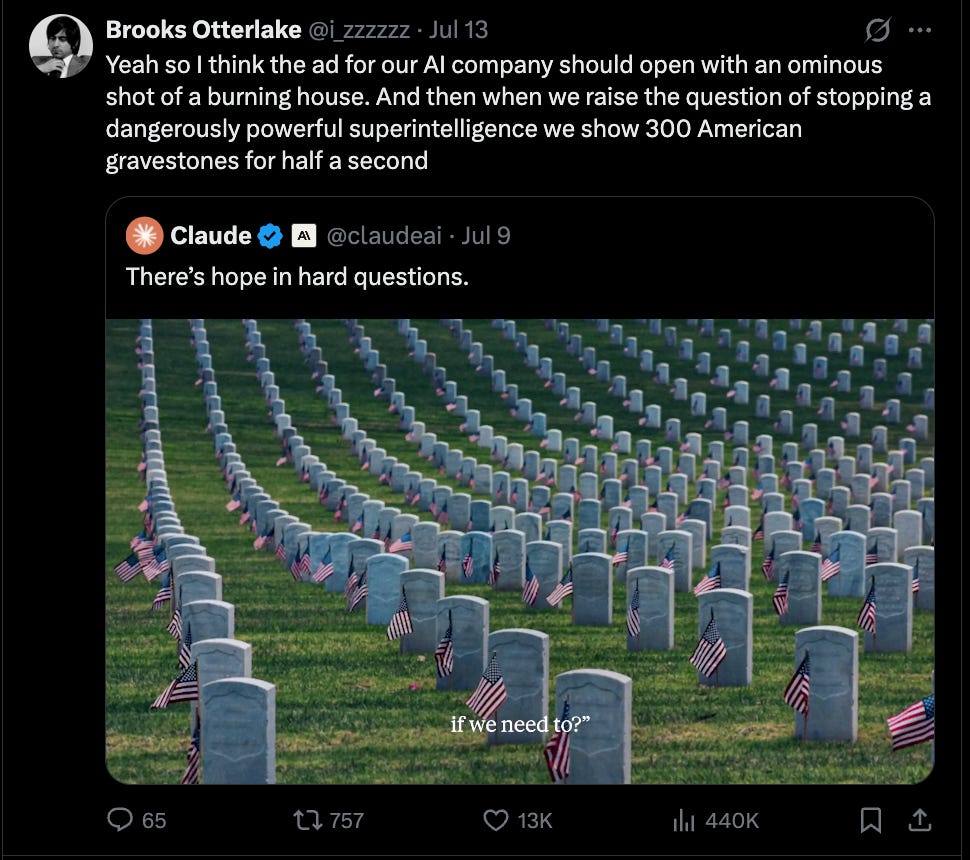
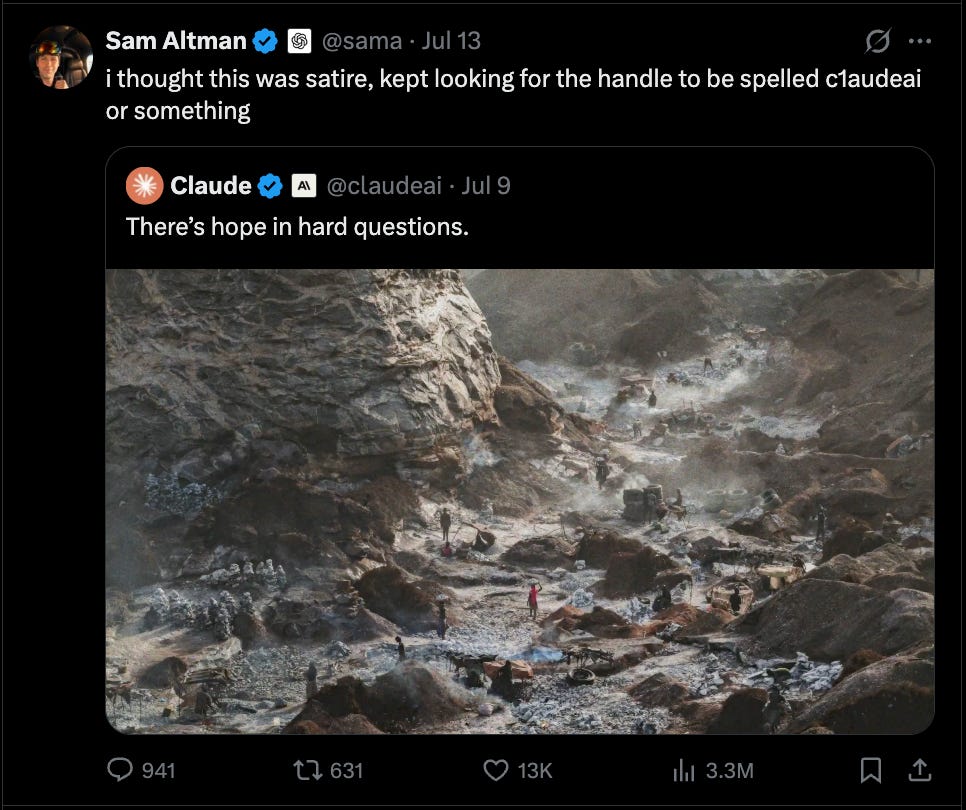
For one brief, beautiful moment, Twitter achieved unity: everyone agreed the ad was weird.
But the ad’s awkwardness should not obscure the significance of what it was trying to articulate. Anthropic is acknowledging that the public’s anxieties are not a communications problem to be solved with better product demos. They are questions of legitimacy.
Who sets the rules? Who absorbs the displacement? Who decides which risks are acceptable? Who is accountable when systems behave in ways even their creators cannot fully explain?
The company’s awkward commercial reflects a real shift. AI companies know technical superiority alone will not be enough, they also need social permission. The challenge is that social permission cannot be granted by the company asking for it.
Demis Wants Brakes
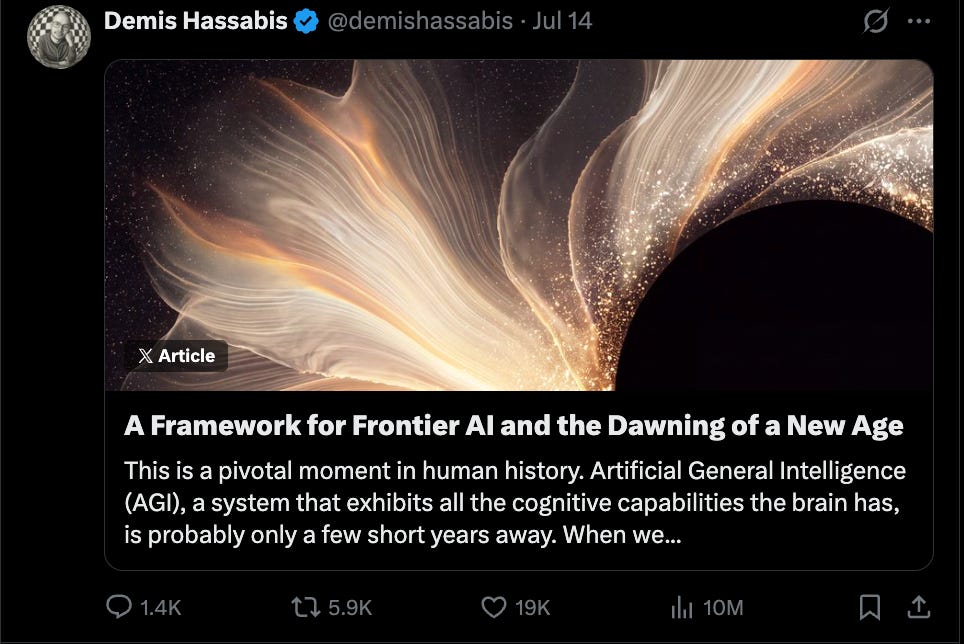
Demis Hassabis offered the week’s most concrete proposal. The Google DeepMind CEO called for a U.S.-led international system of frontier AI oversight, built around an industry-funded but independently governed standards body staffed with top technical experts and modeled partly on FINRA, the private regulator that oversees parts of the American securities industry.
Under the proposal, developers would provide frontier models for testing before release. Evaluators would probe them for dangerous capabilities involving cyberattacks, biology, deception and other high-risk domains. Eventually, passing these evaluations could become a requirement for access to the U.S. market. The body would cover powerful models regardless of whether they were developed domestically or abroad, or released openly or kept proprietary.
Most strikingly, Hassabis argues that such an institution should be capable of coordinating a broader slowdown if evidence suggests that risks are escalating beyond our ability to control them.
This is not a call to stop building AI. Hassabis remains one of the field’s great optimists. He believes advanced AI could accelerate scientific discovery, transform medicine and potentially usher in an era of extraordinary abundance.
That combination - radical optimism about the destination and deep concern about the journey - is what makes his argument important.
The logic should be fairly uncontroversial. As systems become more capable, the cost of discovering dangerous behavior after deployment rises. Pre-release testing, external scrutiny and agreed intervention thresholds are standard features of industries where failure can impose costs on people other than the producer.
These warnings from researchers and leaders of labs frequently run into reflexive techno-libertarianism: “regulation will only slow us down and cost America the race”. Perhaps. But it is intellectually unserious to conclude that because regulation can be captured or poorly designed, no regulatory architecture should exist. That is like opposing aviation standards because certification can delay the construction of airplanes. You may get airborne faster. You are also more likely not to land.
Yes, Demis, Dario and others are not neutral observers, and their recommendations should not be accepted on authority alone. But neither should decades of technical experience be waved away by people whose principal contribution to the debate is confidence.
The real danger is not that we move too slowly, but that we confuse speed with direction - and call anyone who asks for a steering wheel an enemy of progress.
I think the trick in this regulatory proposal is how to ensure it doesn’t become like the FDA. They have a tendency to move slowly on drug approvals, which means that many needed drugs are available first in other countries where the approval process moves faster. In healthcare, that can create medical tourism where US citizens are forced to go to other countries for treatments that aren’t available in the US. But in the case of AI, if we are slow to deploy the latest, most advanced AI models because they are held up in a US approval process, how do we compete with other countries where the models can be released faster?